Juneteenth commemorates June 19, 1865, the day Union troops arrived in Galveston, Texas, formalizing the surrender of the final rebellious Confederate army, and announcing that all enslaved people within the state were free.
Considered to be the longest-running African American holiday, and commonly referred to as “America's second Independence Day,” Juneteenth celebrations have been carried out across the US since 1865, with the holiday gaining federal recognition in 2021.
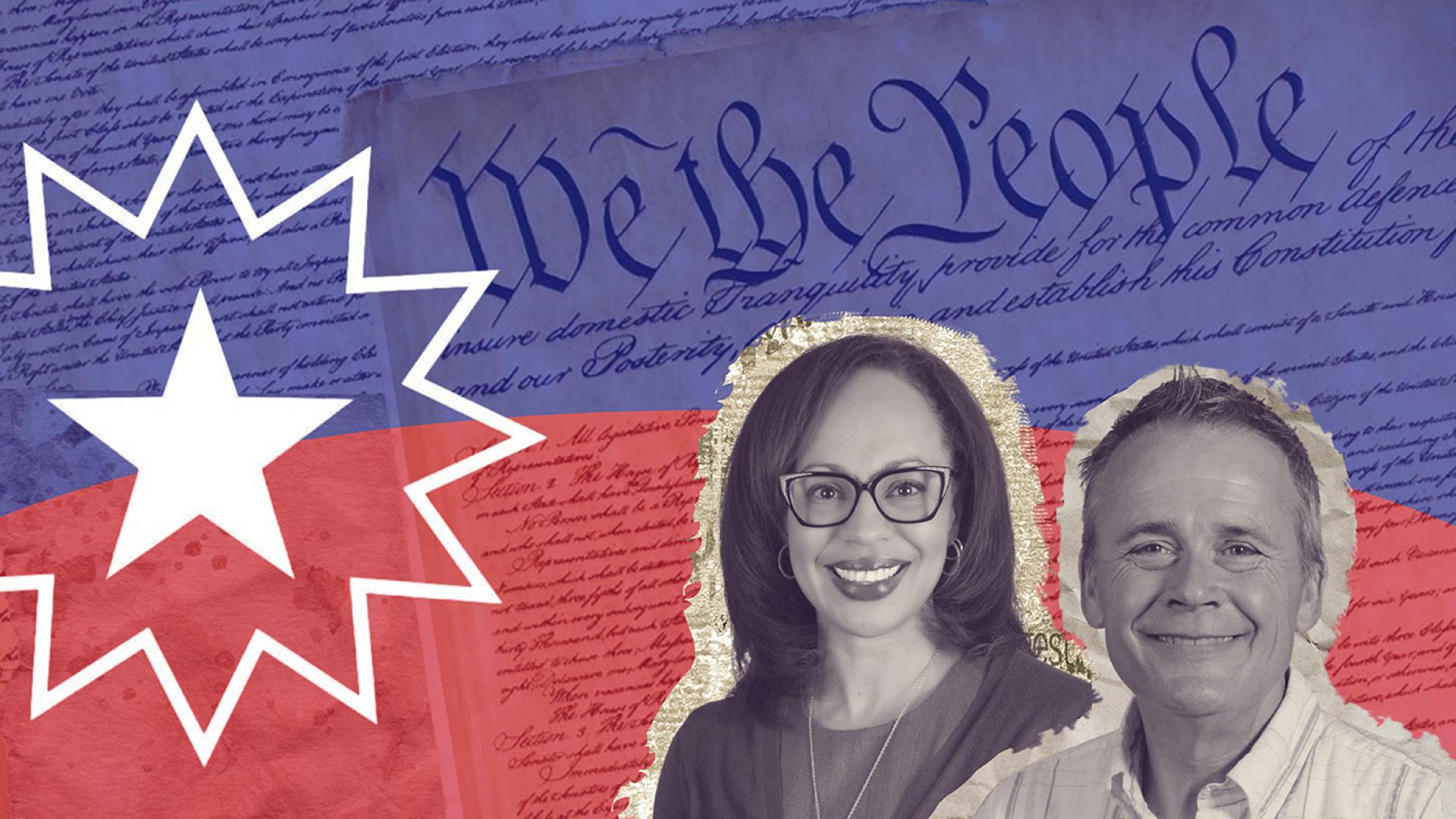
To commemorate Juneteenth, the Community College of Denver sat down with CCD history professor Bill Ashcraft to discuss the history that led to this moment, and with CCD VP of Human Resources Shana Stovall to shed some light on how Juneteenth is a celebration of American culture, progress, and an opportunity for reflection and recognition.
From Emancipation to the Birth of Juneteenth
The lead-up to Juneteenth began on September 22, 1862, at the height of the American Civil War, when Abraham Lincoln delivered the “Emancipation Proclamation,” declaring all enslaved Black people in the Confederate states to be free.
Though viewed as a watershed moment in American history, at the time of its reading, according to Ashcraft, the proclamation itself freed “Absolutely no one.”
“…Because it only freed the slaves that were in Confederate states that were actively rebelling, and of course, none of them were going to adhere to that. But here's where Lincoln's genius comes in, in that the Emancipation Proclamation changes the moral fiber of the war.”
While staunch abolitionists such as Frederick Douglass had always maintained that the Civil War was a war for emancipation, up until 1862, the prevailing view among those in the North was that the war had been fought to preserve the Union, more than it was to bring an end to slavery. Lincoln’s proclamation laid out in explicit terms that one couldn’t happen without the other.
“[The Proclamation] conditions people in the North for the next step that [Lincoln] is going to take, and as it becomes clear that the North is going to win, it is Lincoln that is the moving force to the passage of the 13th Amendment to the Constitution.”
Though he spent the first half of the war refraining from supporting total outright abolition, Lincoln had always personally detested slavery. As pressures from his personal life, activists like Douglass, and members from within his own party grew, Lincoln became resolved to permanently end the practice of slavery.
“In Lincoln's mind, he could see a situation where when the war is over, a southern slave owner appearing before a friendly judge in the South would say ‘[the Emancipation Proclamation] was a war measure and now the war is over, give me back my slaves,’ so to Lincoln, the 13th Amendment amending the Constitution, making slavery unconstitutional was critical.”
Flash forward to 1865, Northern victory over the South is imminent, and Abraham Lincoln turned his attention toward what re-admitting former rebellious states into the Union might look like.
“One of the requirements that Lincoln did feel good about before he died was [former Confederate states] would have to ratify the 13th Amendment. All slave owning states would have to say, ‘OK, these are the rules. Now we understand slavery is unconstitutional.’”
On January 31, 1865, the 13th Amendment to the Constitution abolishing the practice of slavery would gain passage in the Senate. Less than 3 months later, Confederate General Robert E. Lee would surrender to Union General Ulysses S. Grant at Appomattox Court House, effectively ending the war.
As such, Union forces would begin making their way into the southern states, enforcing the terms of the proclamation, and making it clear that each former rebellious state would have to ratify the 13th before rejoining the Union.
Lincoln himself would never live to see this reality come to pass, as 5 days after Lee’s surrender, President Lincoln would be assassinated by John Wilkes Booth in Ford’s Theatre on April 14th, 1865.
Despite Lincoln’s death, Union forces pressed on through the South. 65 days after the President’s assassination, on the morning of June 19, 1865, Union Major General Gordon Granger arrived in Galveston, Texas, to formalize the surrender of the last standing Confederate Army. There, Granger read aloud General Order 3, informing the people of Texas that all enslaved people were free, and thus, Juneteenth was born.
In the Present Day
Turning toward the here and now, CCD VP of Human Resources Shana Stovall sheds some light on what Juneteenth means to her as a Black American.
“It is a deeply personal day of gratitude. I feel grateful that I have the freedom to celebrate this day,” Stovall says.
“…Celebrating Juneteenth means that I take a moment to sit and reflect. I re-read the historical accounts of the events of June 19, 1865, and I try to envision what it must have been like to be there in those moments. I reflect and I pray. I pray in thankfulness for the deliverance of Black Americans of the past, and I pray for continued guidance and deliverance for Black Americans now and in the future.”
Stovall’s sentiments are grounded in gratitude. “As a Black woman, I am always particularly moved by the stories of Black women before me who overcame atrocities and disparate treatment,” she says.
“It’s because of them that I am able to hold the roles I have today and do the work that I do in order to try and make a future even brighter for other Black women.”
Looking Forward
Celebration, gratitude, and reflection underpin Stovall’s feelings toward Juneteenth. In the spirit of reflection, she looks at Juneteenth as an opportunity to “…teach the history accurately, without judgment, and with the full truth. It feels like our history is becoming more diluted and being erased.”
In that same vein, Ashcraft says “…Juneteenth, for it to really have meaning, I think, is a day to come to grips with our past and an honest telling of the story. It’s an understanding of what the fellow next to me, if he happens to have dark skin, what he and his ancestors went through.”
When asked if there are any aspects of Juneteenth’s history she finds relevant today, Stovall says “…The overarching theme that the work isn’t done. It was one thing to emancipate slaves, however, the work wasn’t done there.”
Ashcraft shares a similar sentiment. “How can we fulfill the measure of the [Declaration of Independence], in Lincoln's words, to ‘lift the burdens off the shoulders of men here and around the world?’”
As Stovall puts it, that work continues through institutions like the Community College of Denver. To her, CCD is essential in advancing opportunity for students from all marginalized backgrounds.
“I am biased, but I believe we play the most important role by providing one of the most valuable investments: education,” says Stovall.
“CCD in particular makes a really concerted effort to open our arms to every student who comes to us and welcome them, wrap them up with support and guidance.”
“…I believe every staff and faculty member at CCD truly, at their heart of hearts, believes in the power of education and we all feel empowered when our students reach their goals. To me, that is the ultimate sense of community; when you can walk into somewhere as a stranger, but walk out as part of a group that supports you.”
Though we reflect on the tragedies of the past, we also look to the future.
“…One of the benefits of Juneteenth [like the Declaration of Independence] is it holds out hope that this is what we want to be…This is what we aspire to be… And it's an unfinished work because we are unfinished as people.”
Looking toward the fundamental spirit of Juneteenth, Stovall reminds us “Black history is American history.”
“Attend the events, support Black-owned businesses (all through the year), make an effort to sit and absorb the events, reflect on the past, and approach everything with a spirit of curiosity and to learn.”
She encourages all members of all communities to “celebrate this joyous day with us.”
Denver Juneteenth celebrations will be taking place all weekend. If you’d like to participate and attend, click here for a comprehensive list of events taking place all throughout the city.
Grammar and format checks provided by Chat GPT.